The Bliss Story
The man who tuned
light like music.
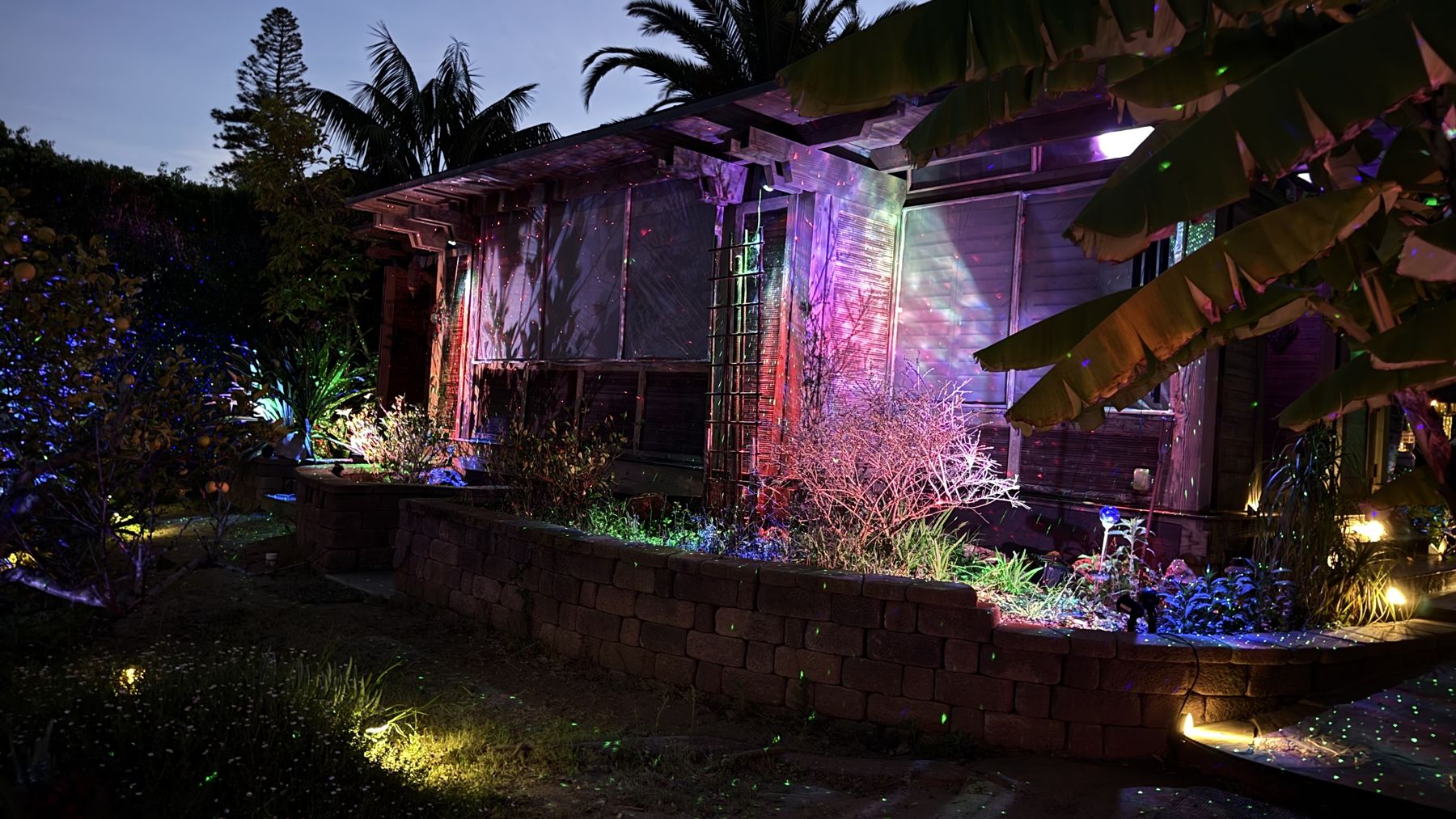
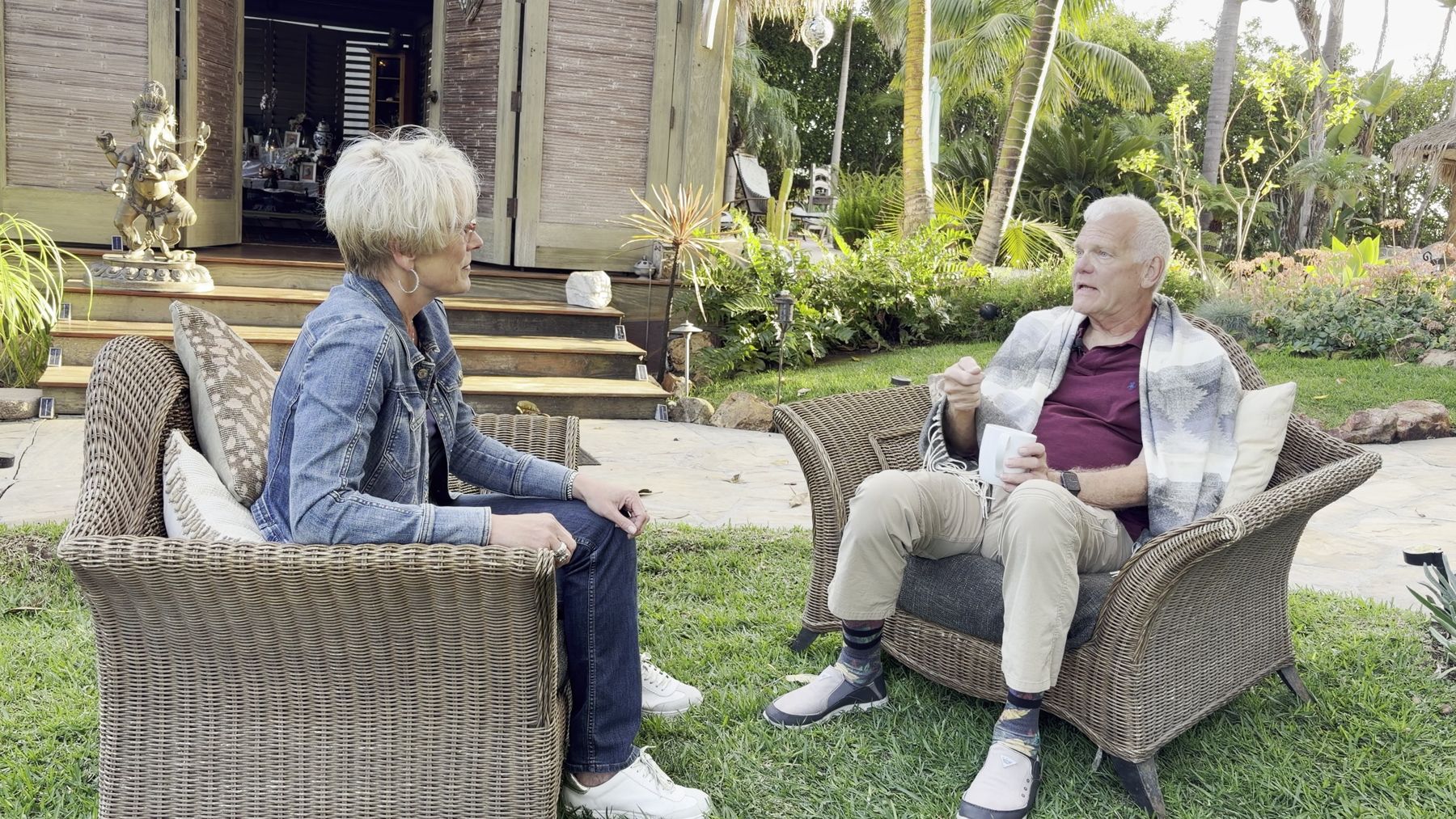
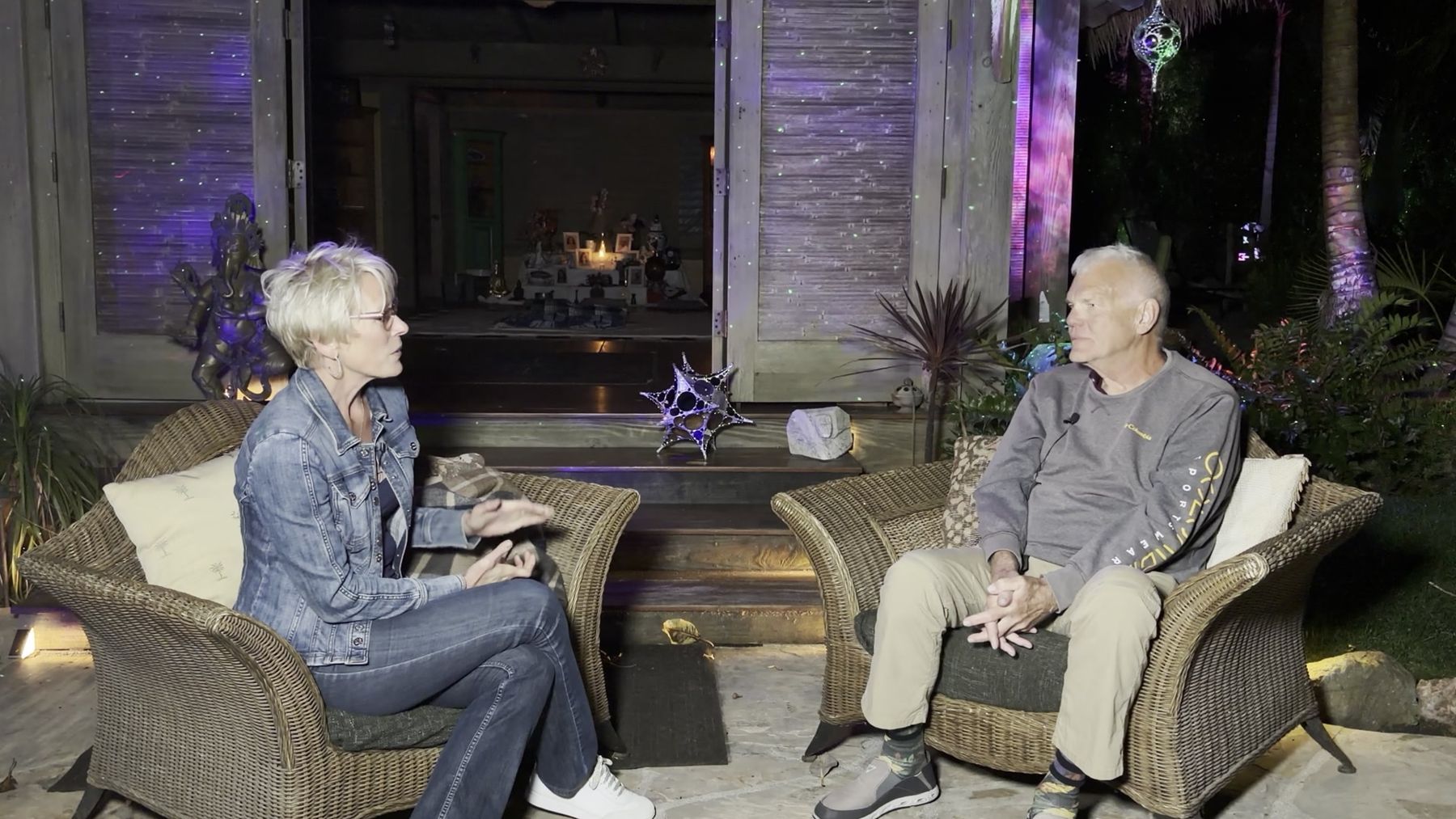
Randy Johnson invented the BlissLight, the laser at the heart of every room we build. Filmed one evening in a Southern California garden, this is his story, in his own words.
Chapter one
A balloon and a mirror
Emporium, Pennsylvania. A very small town, and a boy of five who wanted to see what sound looked like. He took an empty toilet paper tube, stretched a balloon membrane over the end, and glued on a piece of mirror broken out of his mother's compact. Then he sat in the sun and sang into the tube, and the membrane shivered, and the mirror threw living patterns of light across the wall.
My dad had an oscilloscope in the basement. Waveforms, geometric patterns, projected on the inside of a little cathode ray tube. I thought, that's really cool. I'd like to get it out of the little box, onto a wall, or a ceiling.
Most of us grow out of the things we build at five. Randy built the same thing for the next seven decades, each time with better tools.
Chapter two
One of the first lasers on Earth
When Randy was ten, his family moved from Pennsylvania to Oceanside, California. His father had taken a position as a scientist with Hughes Aircraft, the company where the laser itself was born, in the years when a working visible laser was something almost no human being had ever seen.
Some of the first lasers on the planet were laboratory prototypes. My father would bring one home, and I was using that laser to do light shows through my mom's crystals. Abstract patterns and imagery on the wall. That was my first fascination with laser light.
A basement workshop full of electronics. A father who taught him glassblowing. And a question that never left him: how can light be convinced to hold its shape across a room, and what does it do to the person watching?
Chapter three
Spaceships on the clouds
By the mid seventies Randy had met Gary Stadler, a laser artist who became a lifelong friend and mentor, and together they hauled some of the first show lasers in existence up the mountain roads: water cooled ion lasers that drank fifty thousand watts of three phase power to produce fourteen watts of pure, impossible color.
One of the first nights we landed at Magic Mountain, we were scanning what looked like a spaceship on the clouds. And causing a lot of mayhem with traffic.
That is the scale of the obsession: a hundred kilowatt generator, hauled up a mountain, to paint pictures on the sky.
Chapter four
The chord of light
Years later, experimenting with diffraction gratings and wavelengths, Randy found a combination he could not walk past: a deep blue nebula cloud at 450 nanometers, and a field of green laser stars at 532. Two colors of light whose ratio, he realized, sits very close to a perfect fifth, the same interval that makes two piano notes agree.
I said, wow, this is so beautiful. It's like being phase locked into something. You just instantly recognize it as something transcendent.
He had tuned light the way you tune an instrument. But the BlissLight was not finished by an engineer. It was finished by a little girl.
My girlfriend's daughter at the time was having a difficult time sleeping. She was afraid to go to sleep in the dark. She would check the lights I was making, and she was a very big participant in whether she liked it or not. After the fifth or seventh iteration of the BlissLight, she finally said: that's the one. So that's the one we settled on. She was a big inspiration.
The light at the center of our work was calibrated against a child's fear of the dark, and it did not ship until she said it was right. That is why it belongs in bedrooms, and why it works in them.
Chapter five
How do you measure it? You ask the person.
Ask Randy what makes a light experience powerful and the answer is a formula delivered like a shrug: color, light, geometry, and motion. Apply the four together, deliberately, and you can induce a psychological effect. It's like music, he says. The same thing exists with light.
I can give you all the data points and show you all the charts and all the information. But it doesn't mean anything. The thing that really means something is: how does it make you feel? How do you measure that? You just ask the person.
So ask the people. Ask the teacher at a school for autistic children in Utah who announces to her class, we're going to have the stars now, and watches them hurry to lay their mats down for nap time. Ask the family of the woman in a memory care facility who became less distressed and less agitated in the weeks after a light arrived in her room. Ask the parents of the brilliant young man on the spectrum who filmed his reaction the first time he turned his on: pure joy.
The BlissLight has a profound, beautiful effect on human psychology. It's so natural to take it into an environment where people are suffering. In children's hospitals, the cancer kids. If we have an opportunity to alleviate some of that suffering with beautiful light, that is worth doing.
Chapter six
Worth it
Bliss Productions exists to carry this work into the rooms where it matters most: living rooms and bedrooms, dialysis chairs where people stare at a ceiling for hours, infusion clinics, senior care evenings that feel long. Randy's mission, in his own voice:
There's so much tension and chaos in the world. If you can help people to relax, and calm down, and become more centered, that's a great mission. Like I said, if I only help one child to feel better and be happier, then it's worth it.
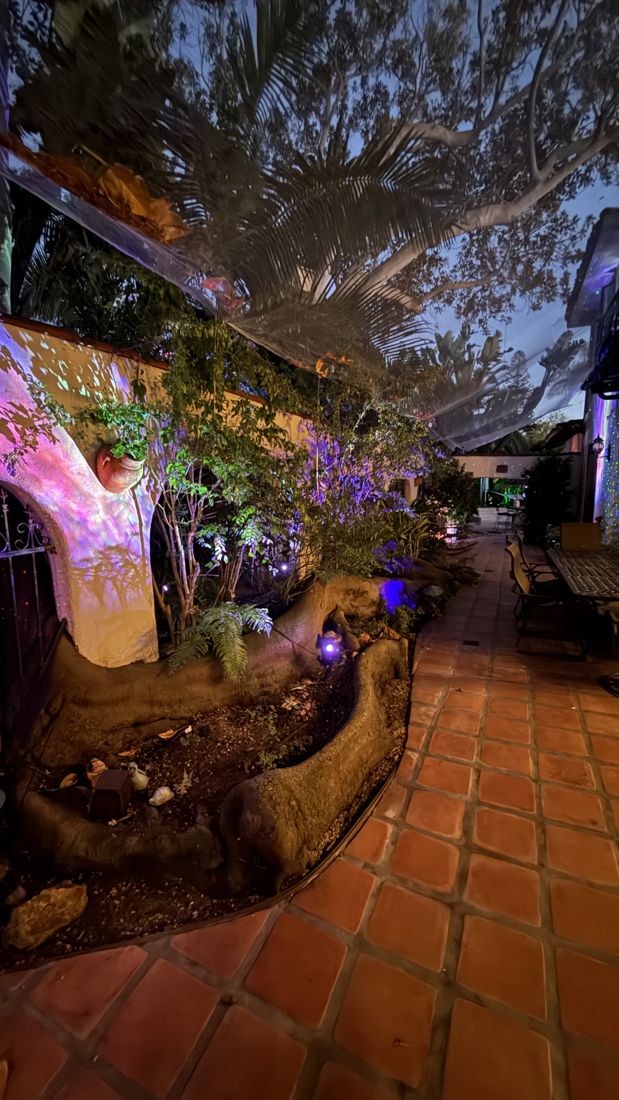
From an interview filmed in a family garden in Southern California. Quotes lightly edited for clarity. The garden photographs on this page are real Bliss installations, not renders.